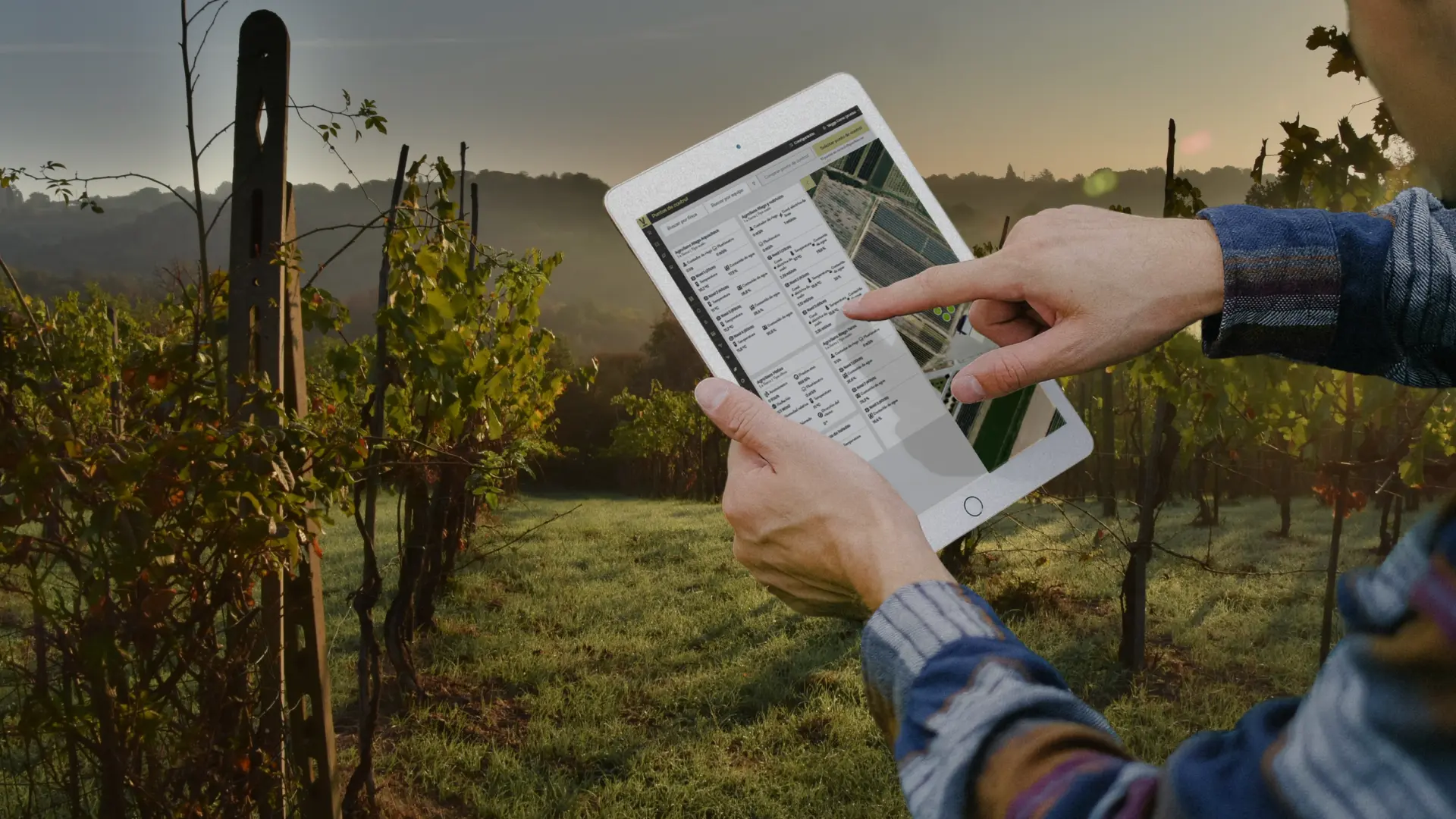
Agroclimatic monitoring
Accurate climate, plant, and soil data to inform decisions about irrigation and nutrition
View real-time data from your sensors and agroclimatic index charts, assess key climate, plant, and soil variables, and make informed decisions to optimize irrigation, prevent plant stress, and avoid crop losses.
Agroclimatic monitoring features
1 / 2
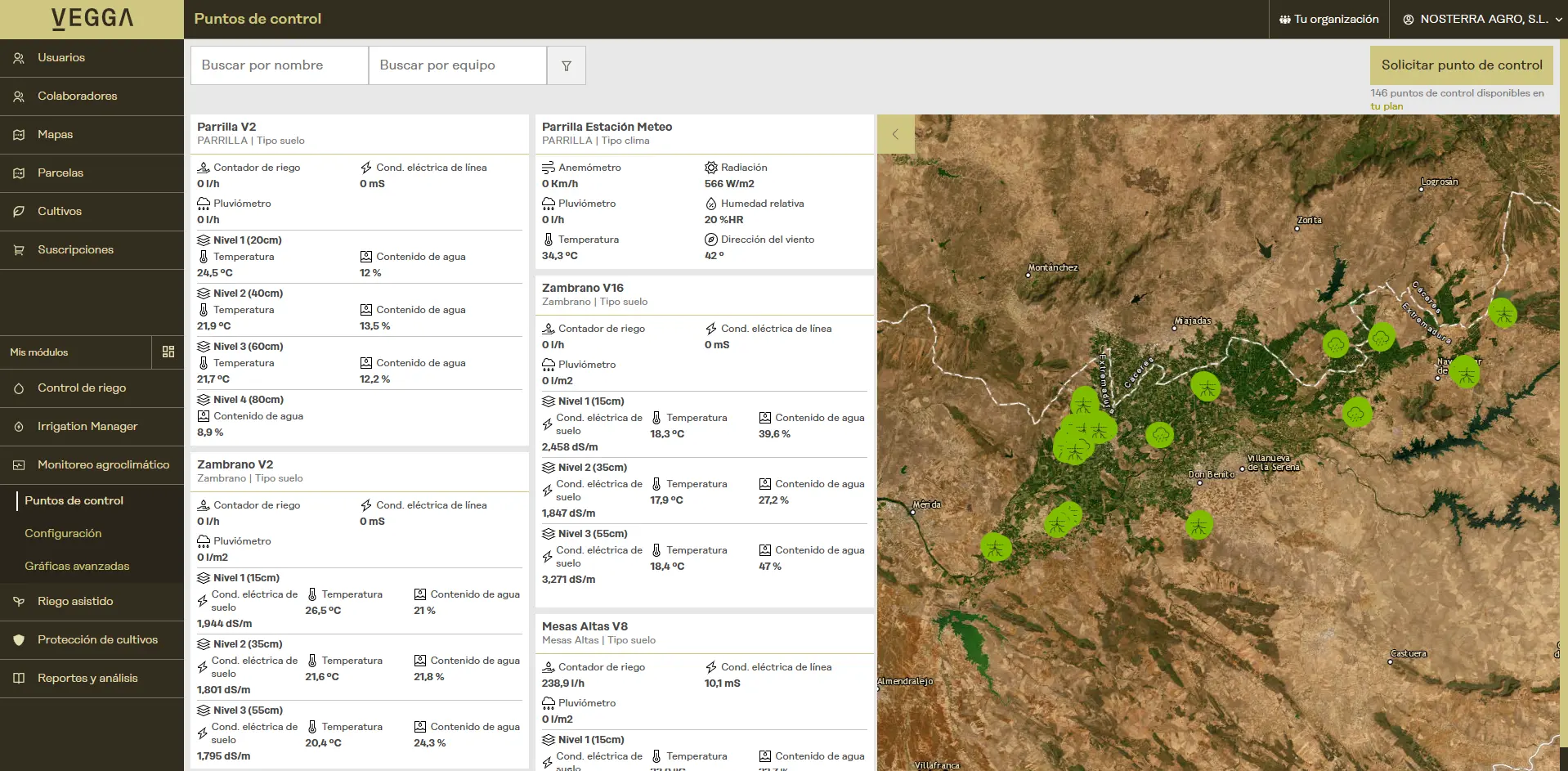
Checkpoints for sensor monitoring
Dashboards intuitively display information from the sensors installed on your farm, making it easier to interpret climate, plant, and soil data so you can make informed decisions and optimize farm management.
2 / 2
Dynamic graphs of calculated agronomic indices
The calculated agronomic indices, derived from data collected by sensors, enable a precise assessment of weather and soil conditions at each monitoring point. These visualizations facilitate the interpretation and monitoring of key variables for agronomic decision-making, such as water availability, crop water status, and nutrient dynamics.
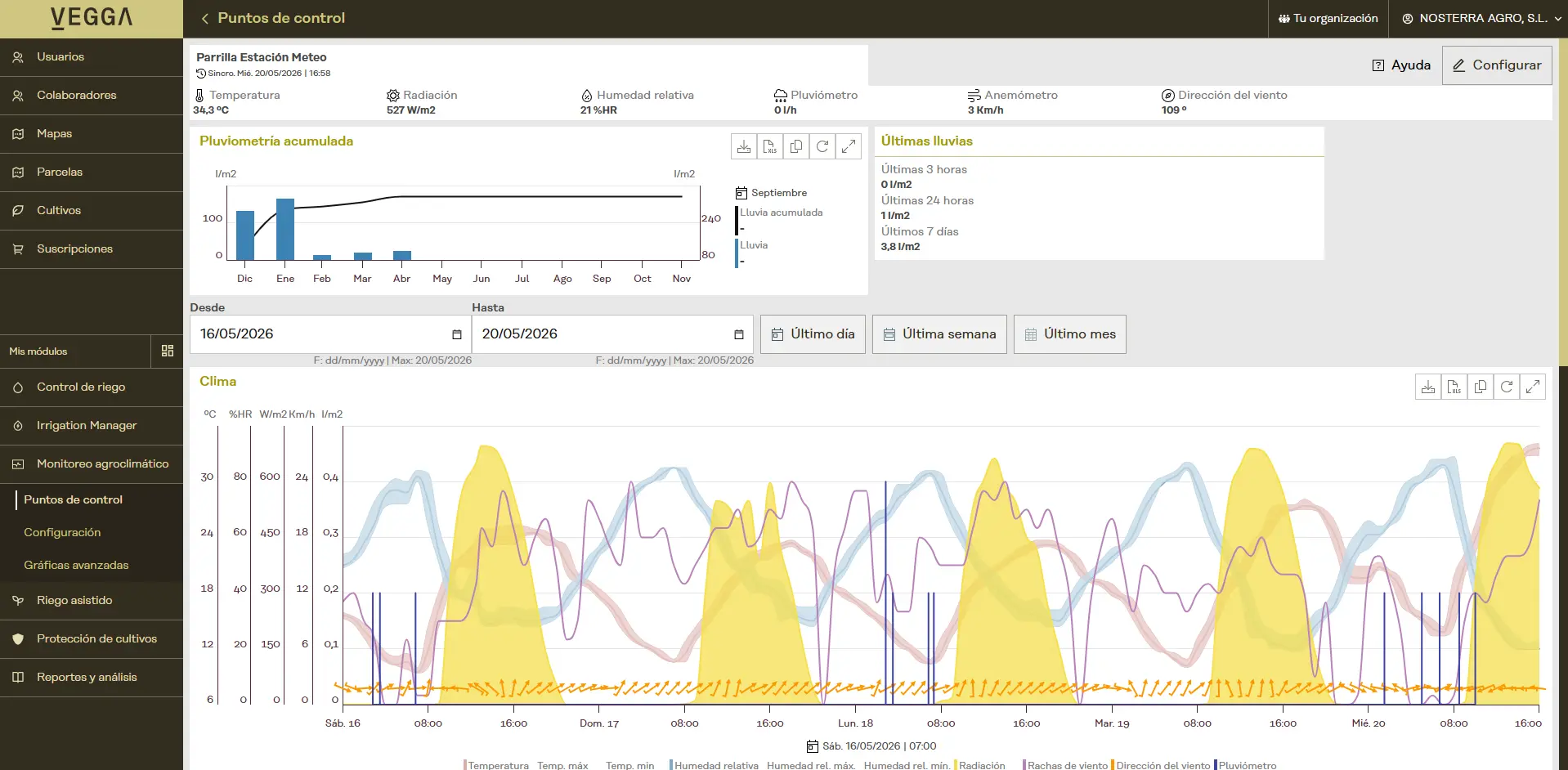
The platform offers dynamic, interactive charts for analyzing trends in the following indices:
- Climate
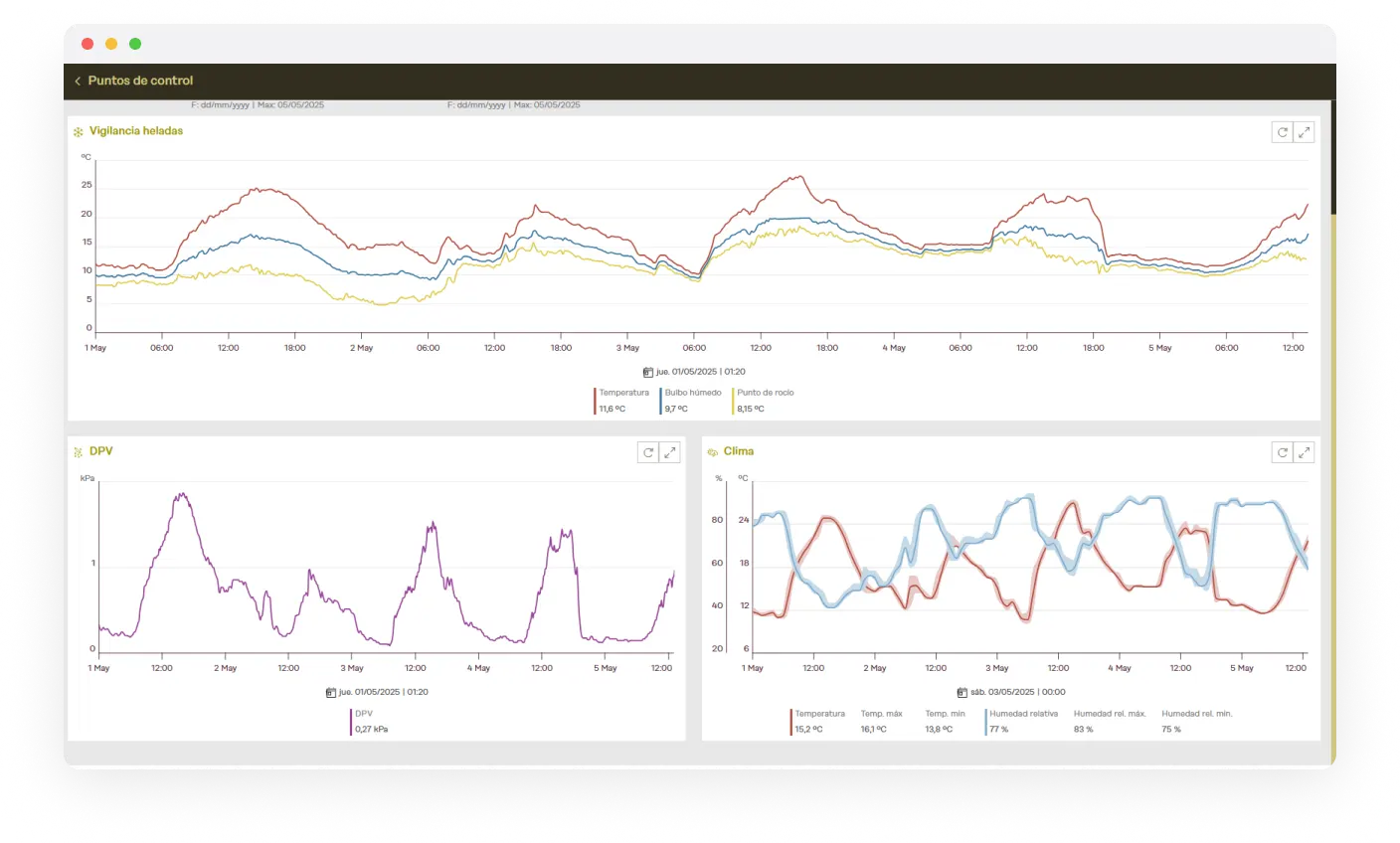
- Vapor pressure deficit (VPD)
- Reference Evapotranspiration (ETo)
- Frost Watch
- Available water capacity
- Nutrition Dynamics
Climate and vegetation charts
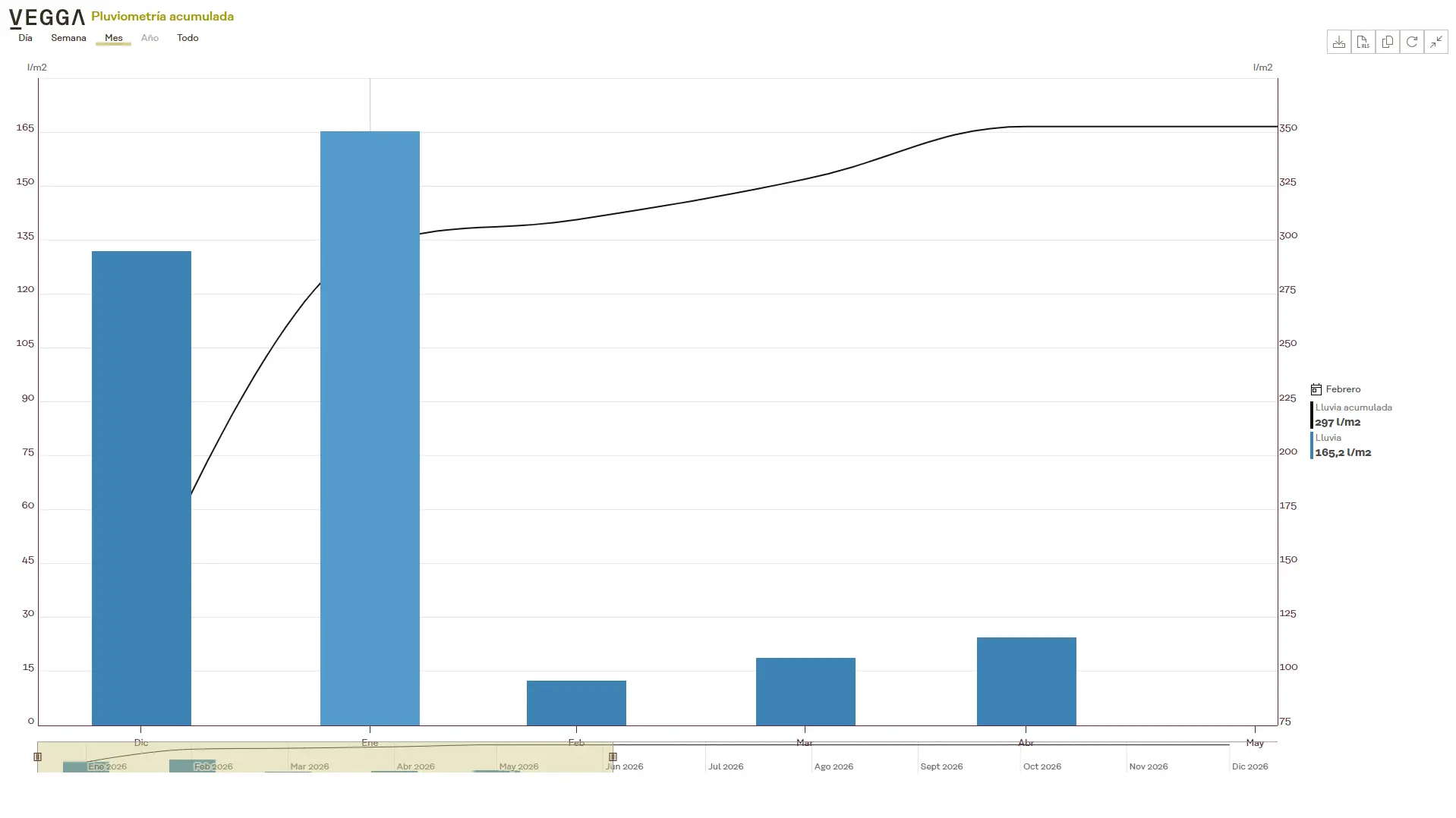
Rainfall measurement
Displays cumulative rain totals and recent precipitation over different time periods. This information helps adjust irrigation, avoid unnecessary watering, and prevent problems caused by waterlogging or excess moisture.
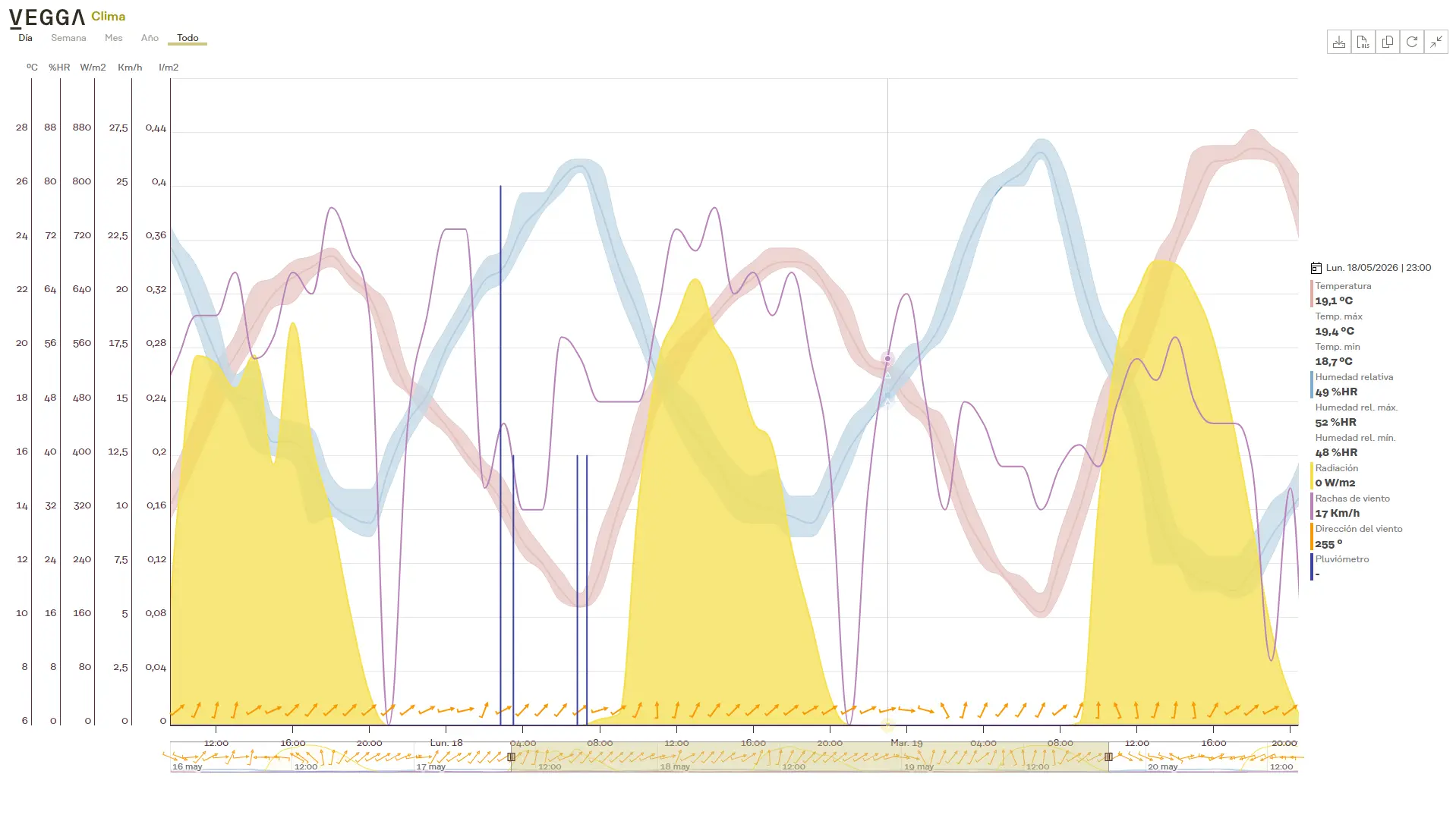
Climate
It integrates data on temperature, humidity, solar radiation, wind, and rain to provide a comprehensive overview of the environmental conditions of the crop. It facilitates the planning of irrigation and other agricultural tasks.
Vapor pressure deficit (VPD)
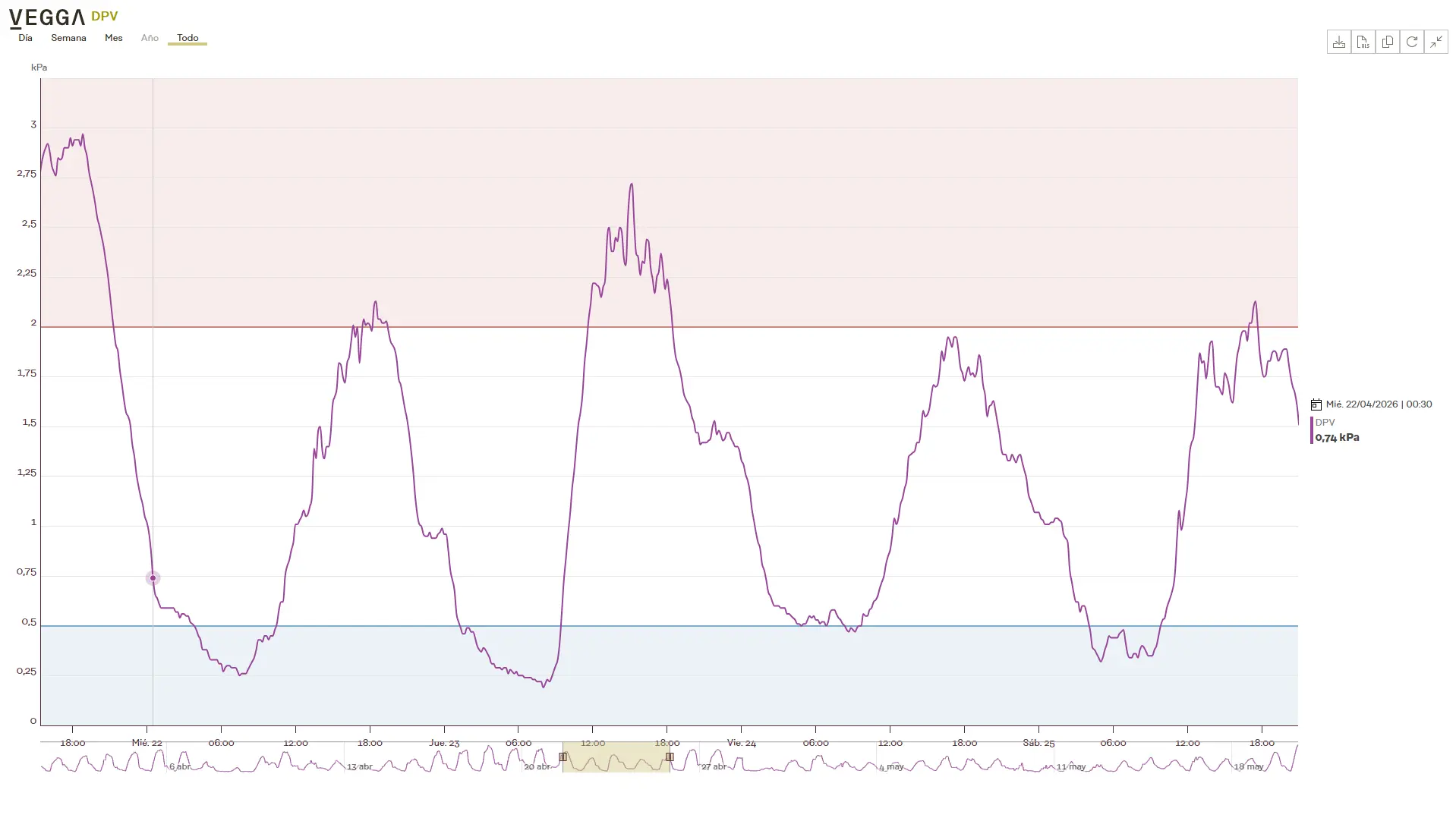
The vapor pressure deficit (VPD) measures the demand for water in the air: when it is high, plants transpire more and may suffer from water stress if they do not have enough water. Knowing the VPD helps prevent crops from becoming dehydrated or stunted in their growth.
Reference Evapotranspiration (ETo)
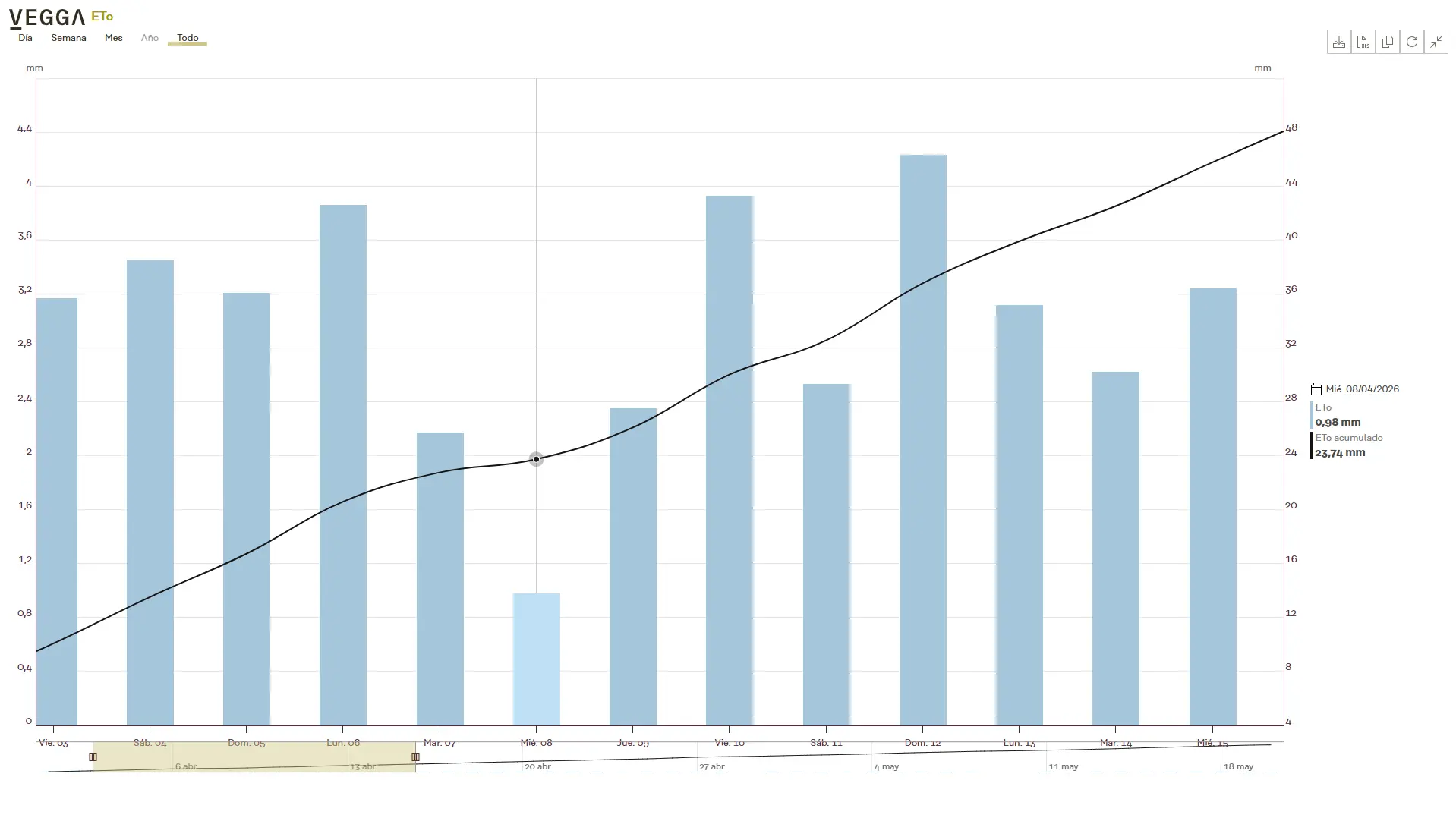
Reference evapotranspiration (ETo) indicates how much water is lost through soil evaporation and plant transpiration under optimal climatical conditions, based on a standard vegetation cover.
Frost Watch
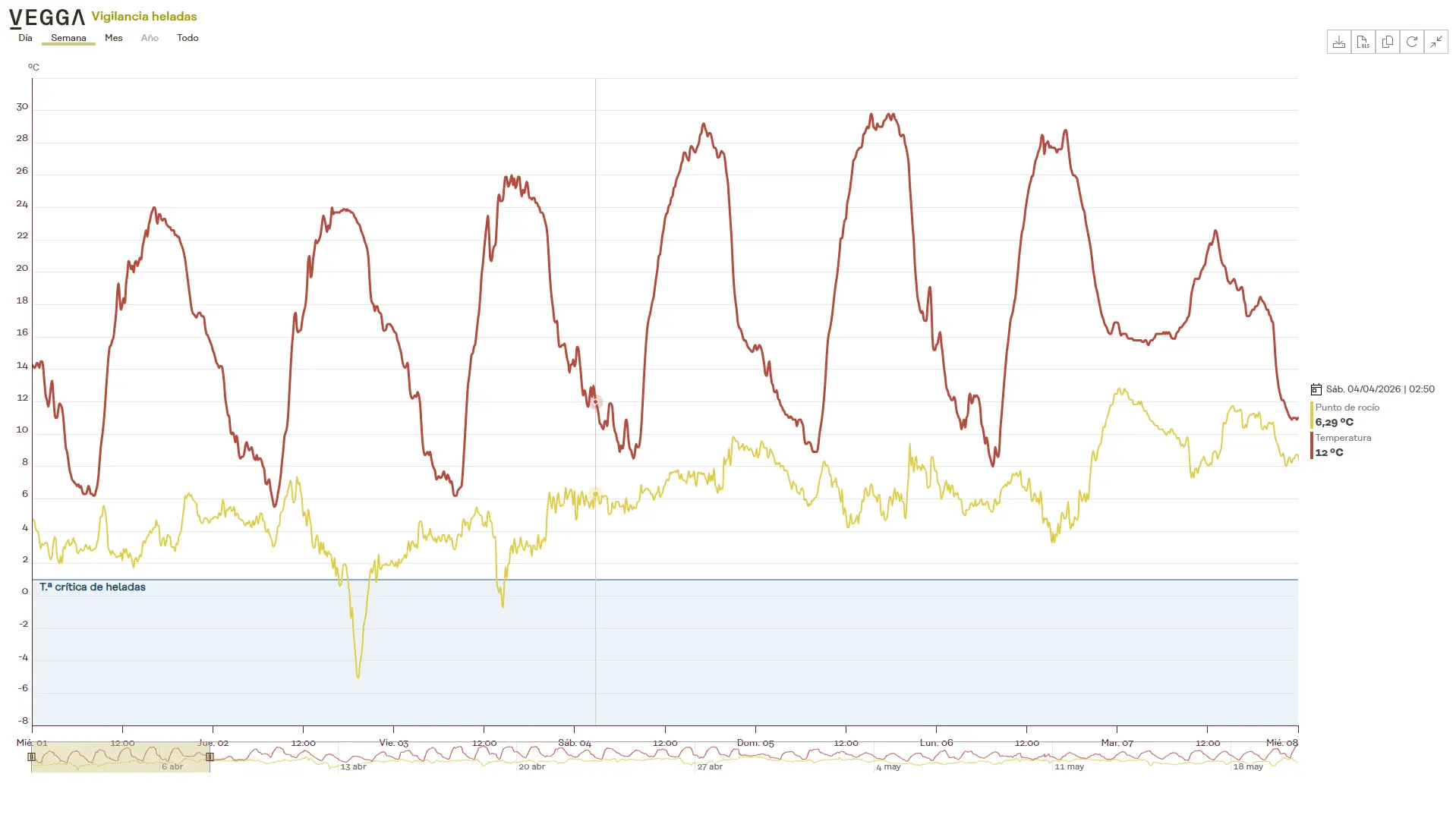
Dew point and wet-bulb temperature help predict the risk of frost. These parameters allow for timely action to protect the most vulnerable parts of the crop.
Soil charts
Irrigation completed
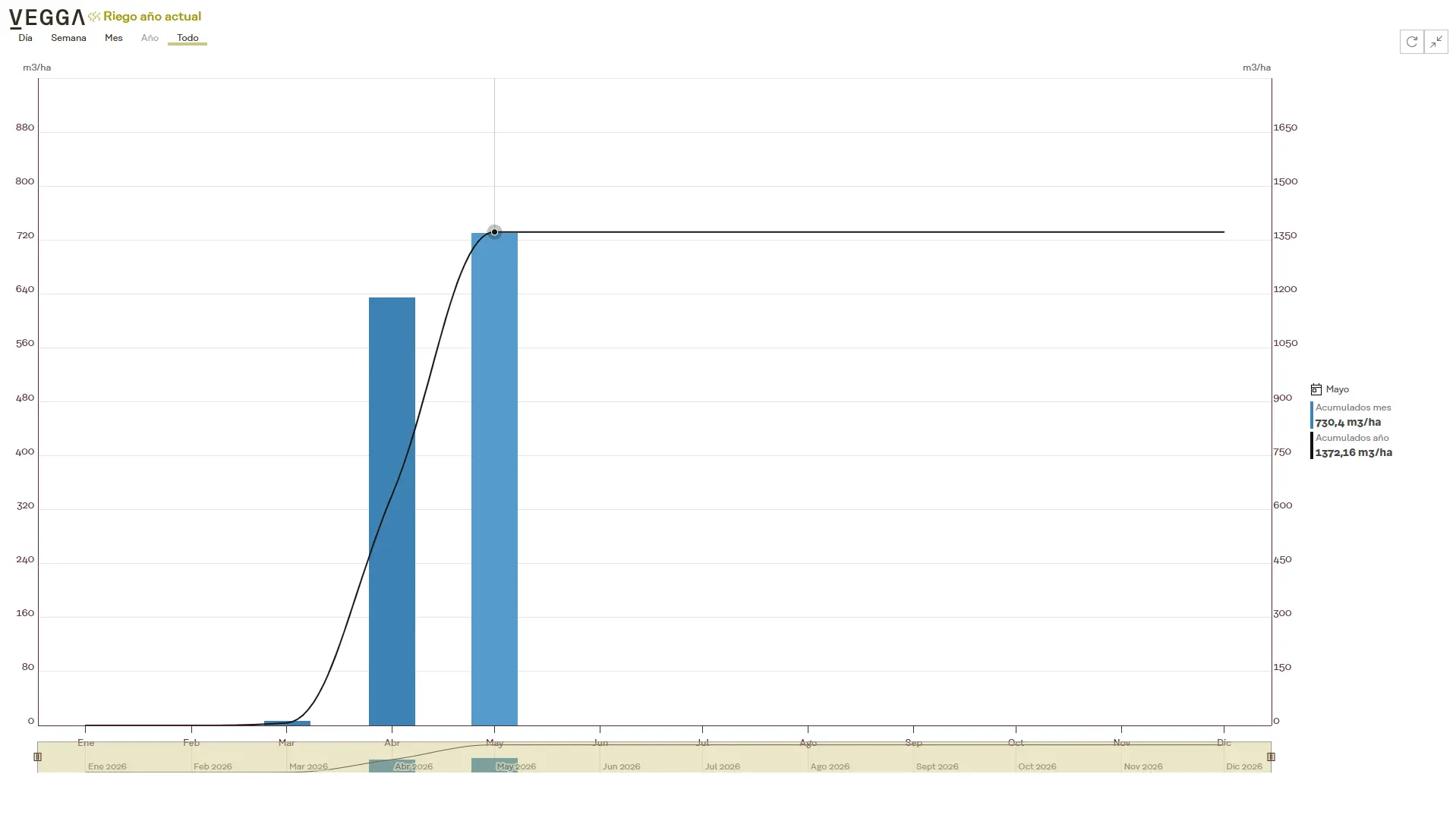
Displays the amount of water applied during the season and details of the most recent irrigation, such as volume and duration. It helps control water usage and verify that the irrigation system is functioning correctly.
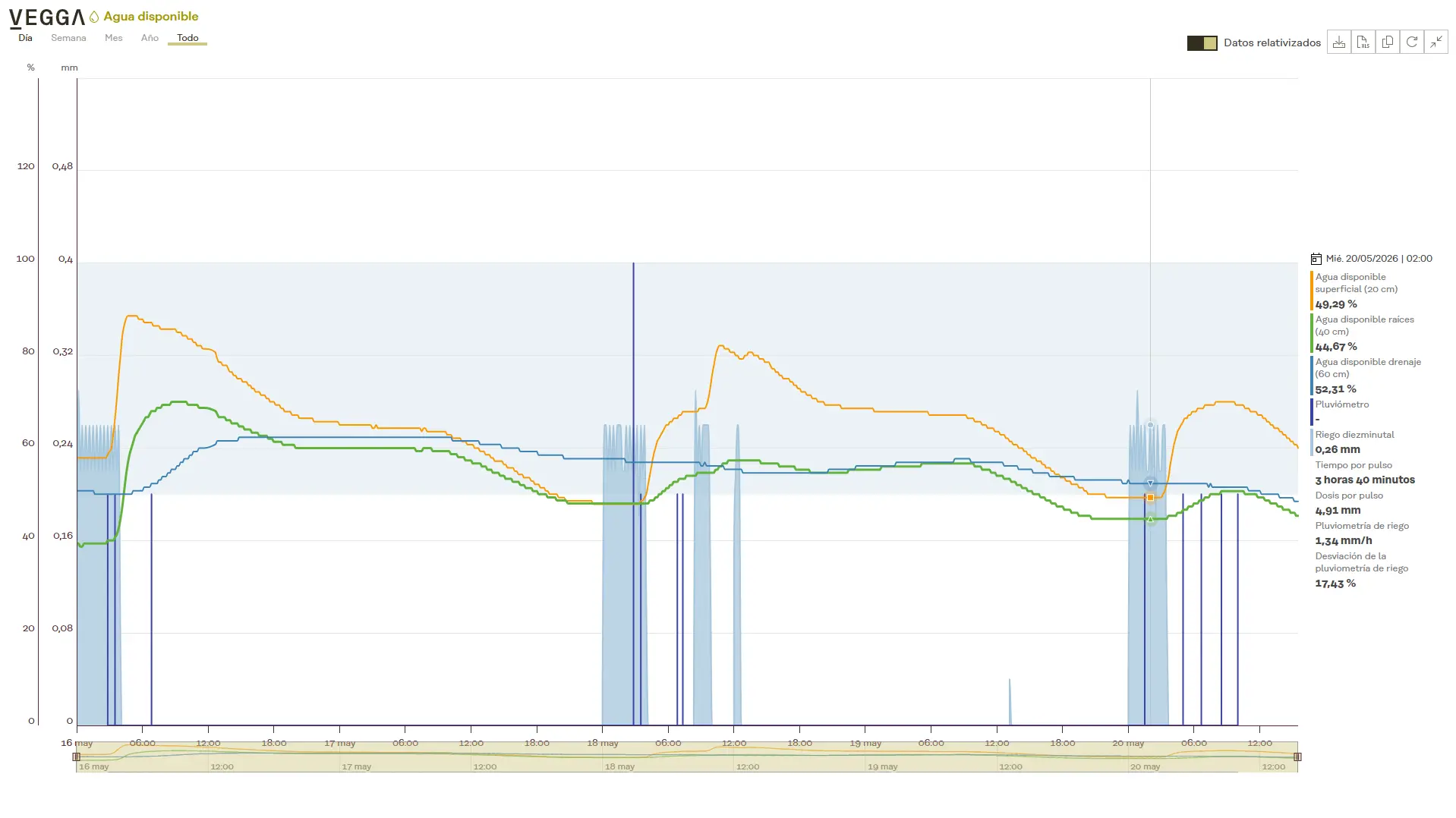
Available water capacity
It shows how moisture is distributed in the soil and how the roots respond after each irrigation. This information allows you to adjust the frequency and duration of irrigation to improve water efficiency.
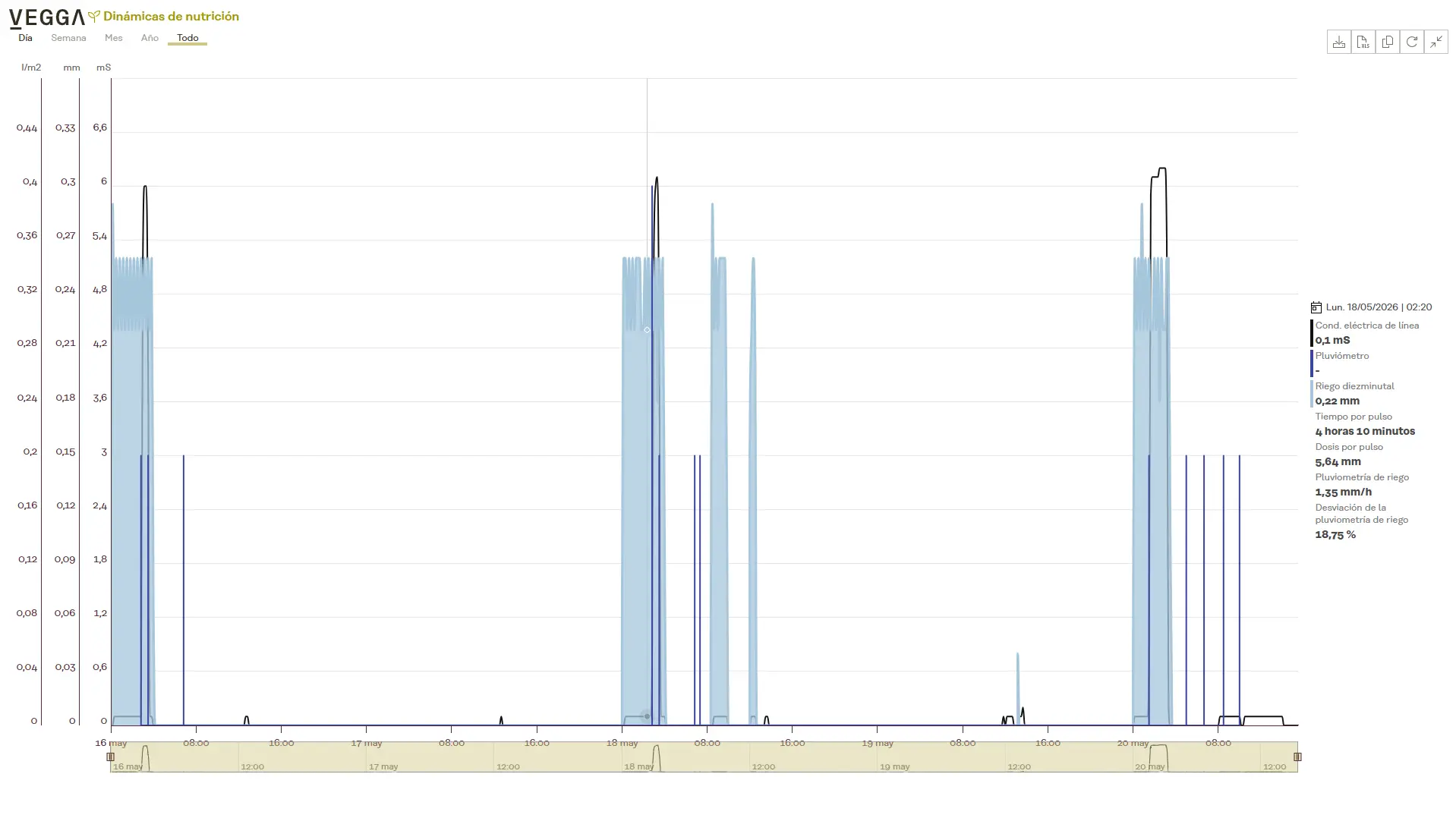
Nutrition Dynamics
Monitoring conductivity and irrigation pulses makes it possible to determine when fertilizer is flowing through the system and to adjust fertigation to improve nutrient uptake and prevent losses.
Benefits of agroclimatic monitoring

Irrigation Optimization
It adjusts the frequency and duration of irrigation based on real-time data on climate, soil, and plants, improving water efficiency and reducing water waste.

Preventing water stress in crops
Monitoring variables such as DPV, soil moisture, and ETo makes it possible to detect stress conditions before they affect crop growth and yield.

Real-time decision-making
View up-to-date sensor data to respond quickly and accurately to changes in climate, crop, and soil conditions.

Protection against climatical risks
Frost monitoring and the analysis of climatical parameters help anticipate critical events and minimize crop losses.

Improvements in fertigation and plant nutrition
Monitoring soil nutrient dynamics and conductivity helps optimize fertilizer application and improve nutrient uptake.

Intuitive visualisation and analysis
The platform generates dynamic graphs and agronomic indices that are ready to interpret, making it easier to analyze crop conditions and manage them more efficiently.
Success Stories
TerraNostra
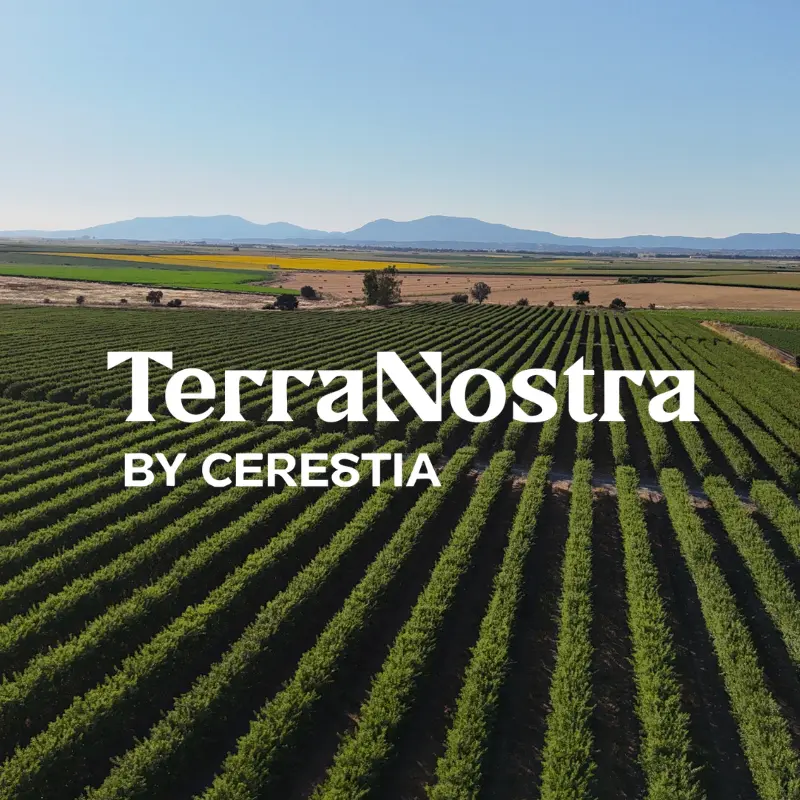
TerraNostra committed to full digitalization to optimize irrigation and maximize productivity. Using VEGGA and moisture sensors, the company turned data into precise, real-time decisions, achieving greater water efficiency, deeper root systems, and more profitable crops.
AgroBee Sens Weather Pack
It monitors key meteorological variables such as Evapotranspiration (ET) and vapor pressure deficit, enabling users to manage the water balance and anticipate irrigation needs.
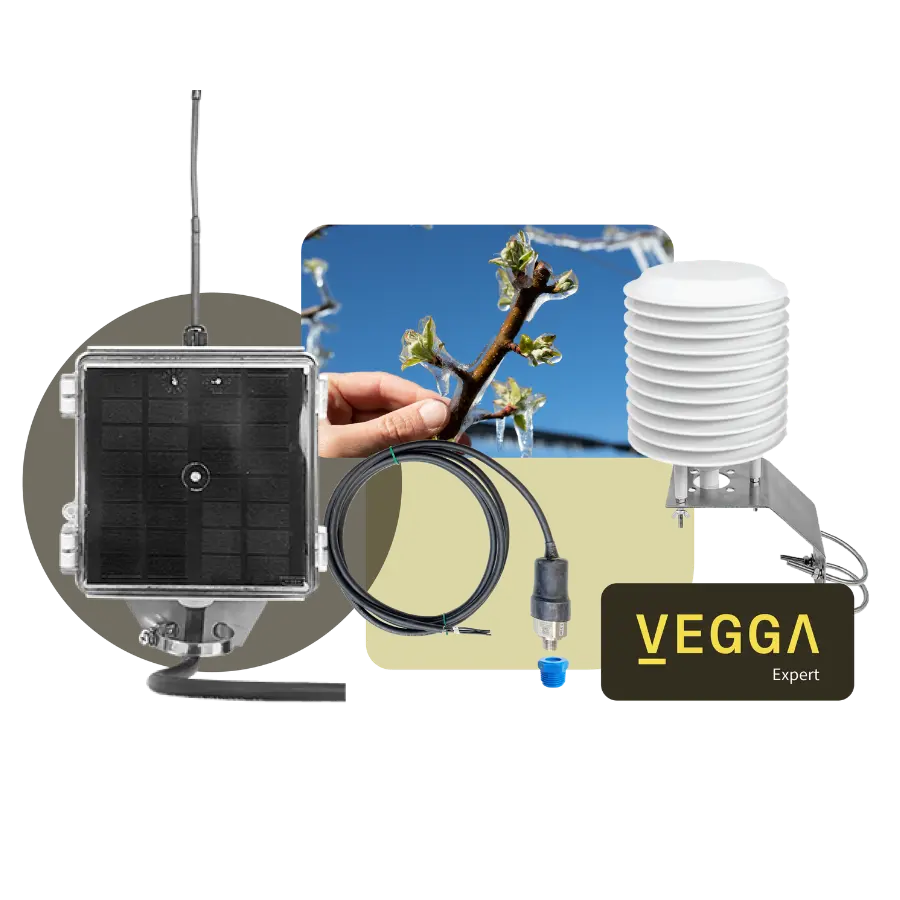
AgroBee Sens Frost Monitoring Kit
Monitors temperature and relative humidity to prevent and manage frost, helping to activate protection systems efficiently.
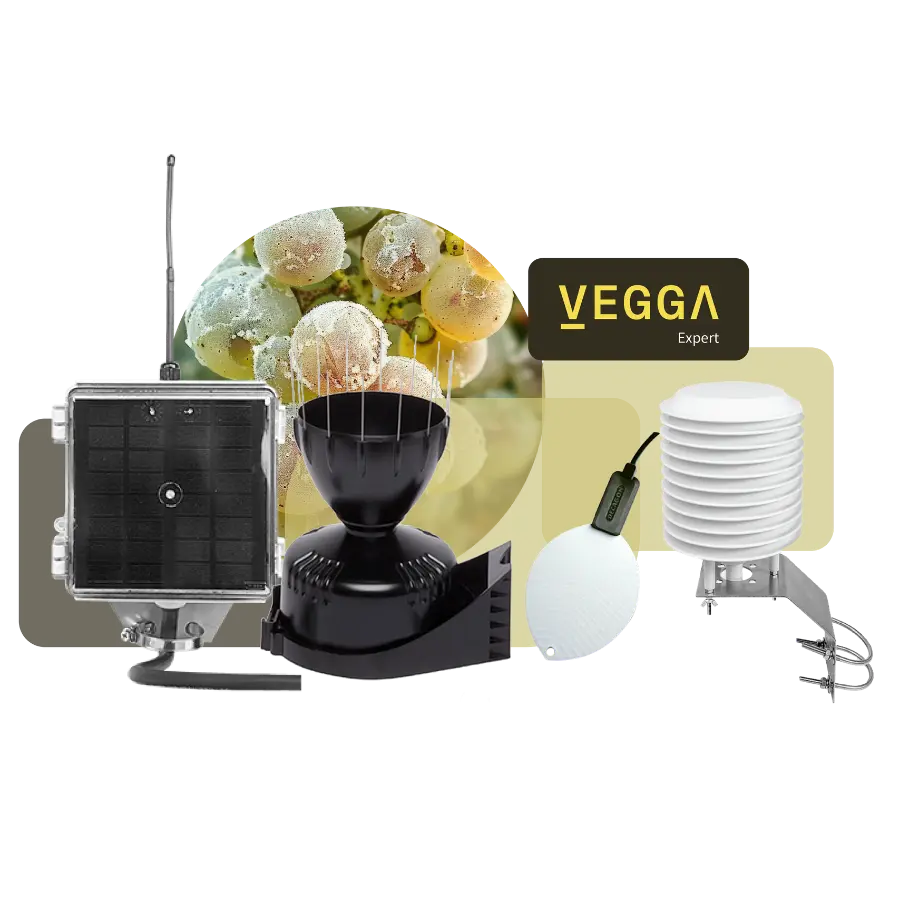
AgroBee Sens Crop Protection Pack
It collects key data on temperature and relative humidity to assess pest and disease risks, enabling informed phytosanitary decisions.
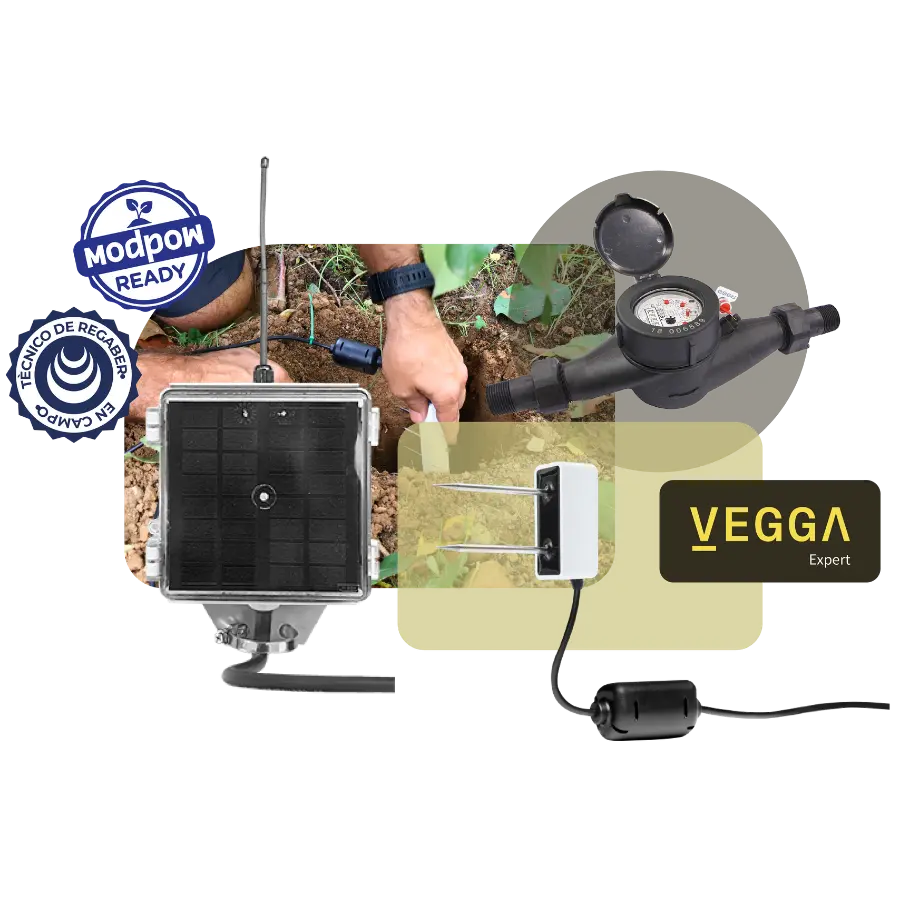
AgroBee Sens Irrigation Pack
Monitor soil moisture and water consumption by sector, helping to optimize irrigation and prevent water stress in crops.
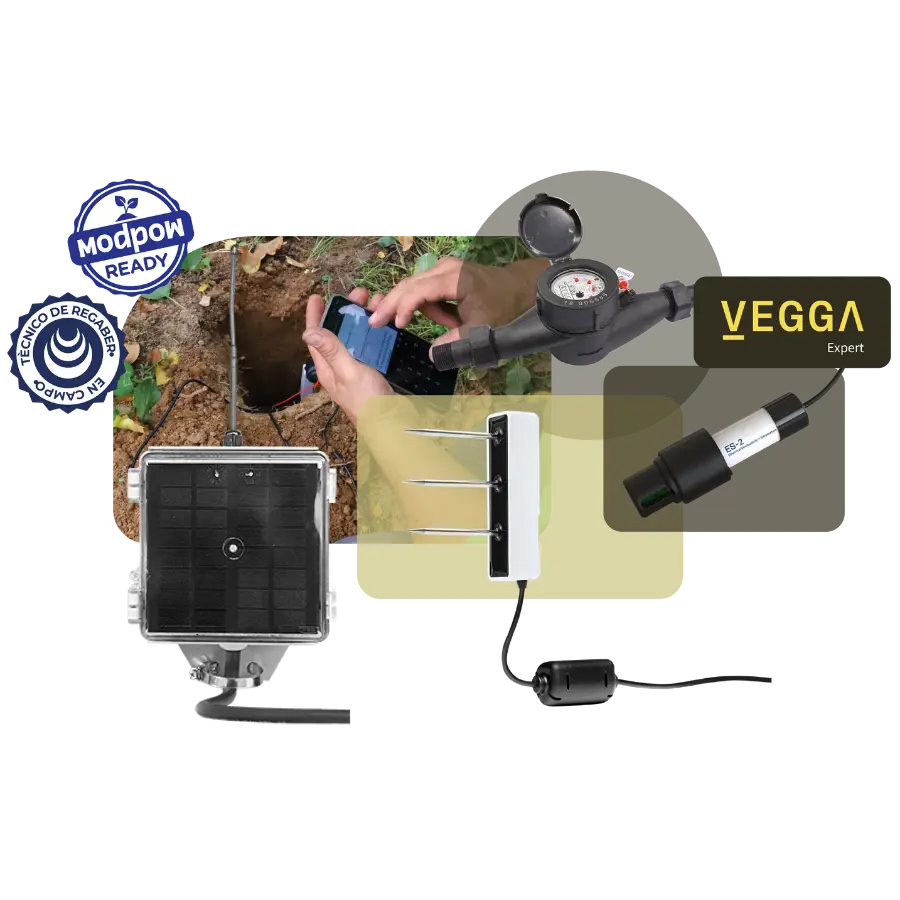
AgroBee Sens Irrigation & Nutrition Pack
Comprehensive soil monitoring through the measurement of moisture, temperature, and electrical conductivity. These parameters make it possible to assess soil moisture conditions and nutrient availability.
Solutions for all crops
Grains and legumes
Cereals and legumes, such as wheat, corn, and alfalfa, require efficient water management, input control, and pest protection.
Olive tree
Olive trees require careful management of water, fertilizers, and pest control to ensure high-quality oil.
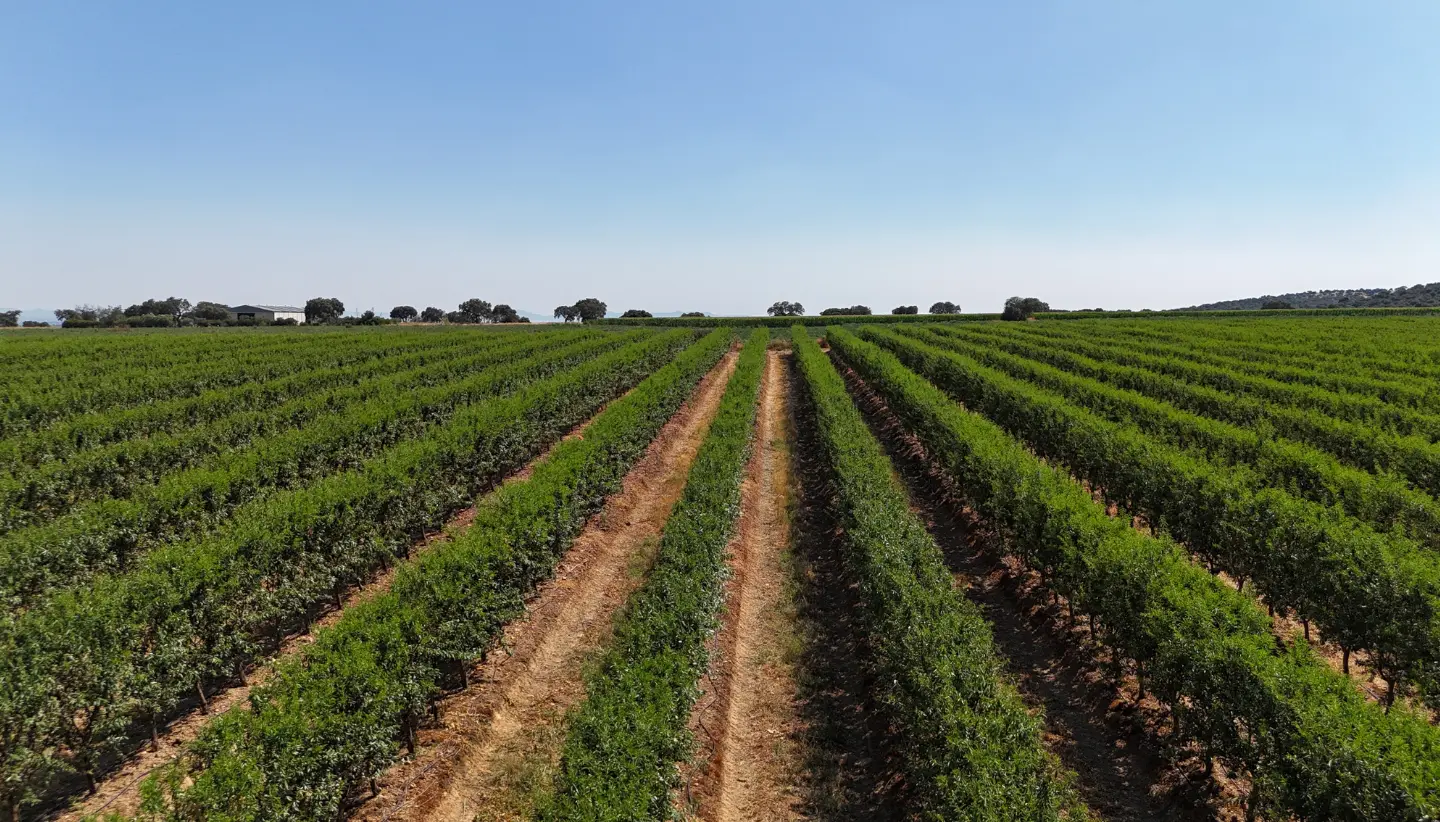
Vine
Vines require careful management of water, fertilizers, and pest control to ensure the highest quality wine.
Oilseeds and industrial crops
Oilseed and industrial crops, such as sunflowers, soybeans, and sugar beets, require efficient water management, fertilization, and input control to maximize productivity.
Leafy vegetables and fruit
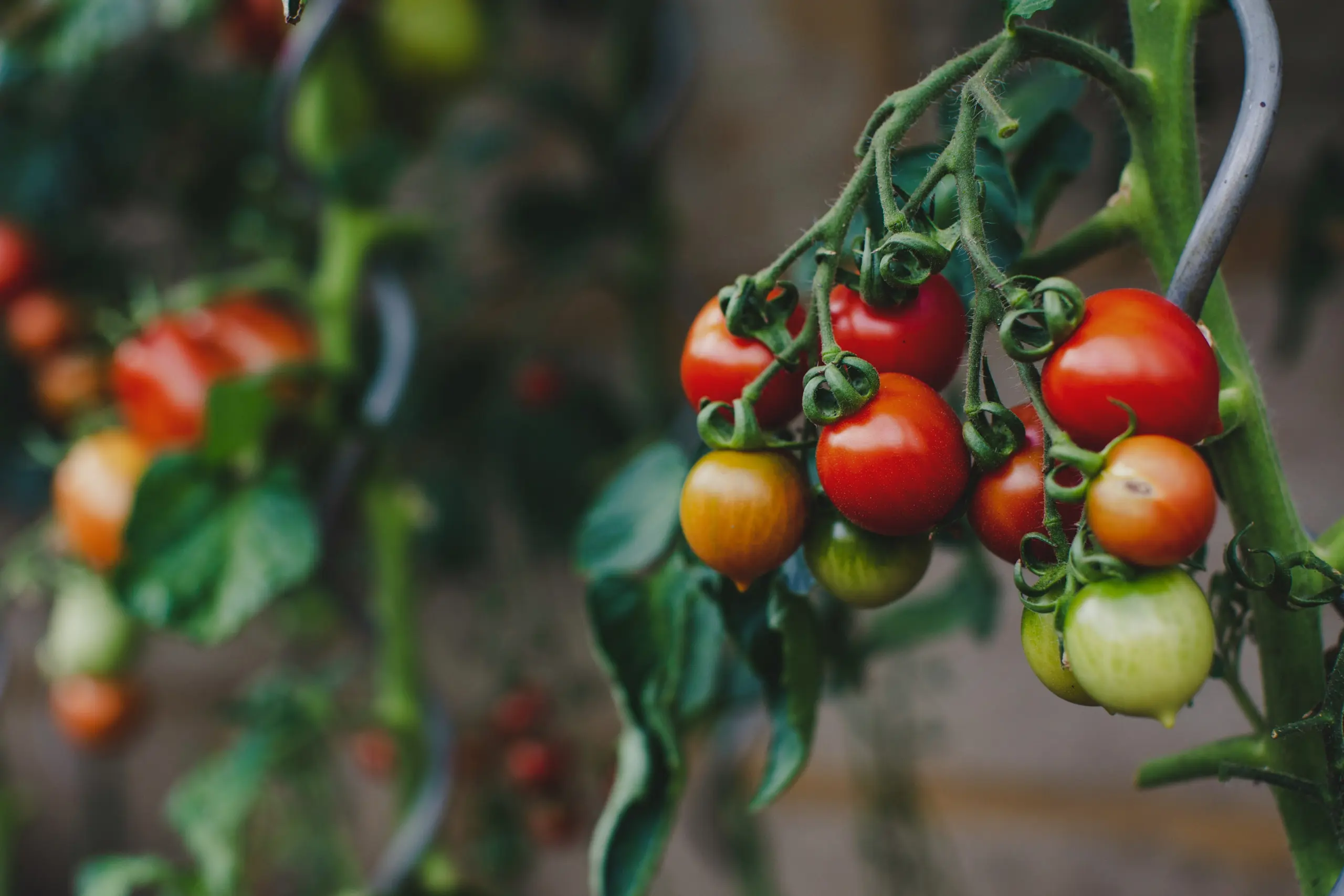
Leafy and fruit vegetables, such as lettuce, tomatoes, and peppers, require careful management of water, fertilization, and pest control to maximize productivity and quality.
Nuts
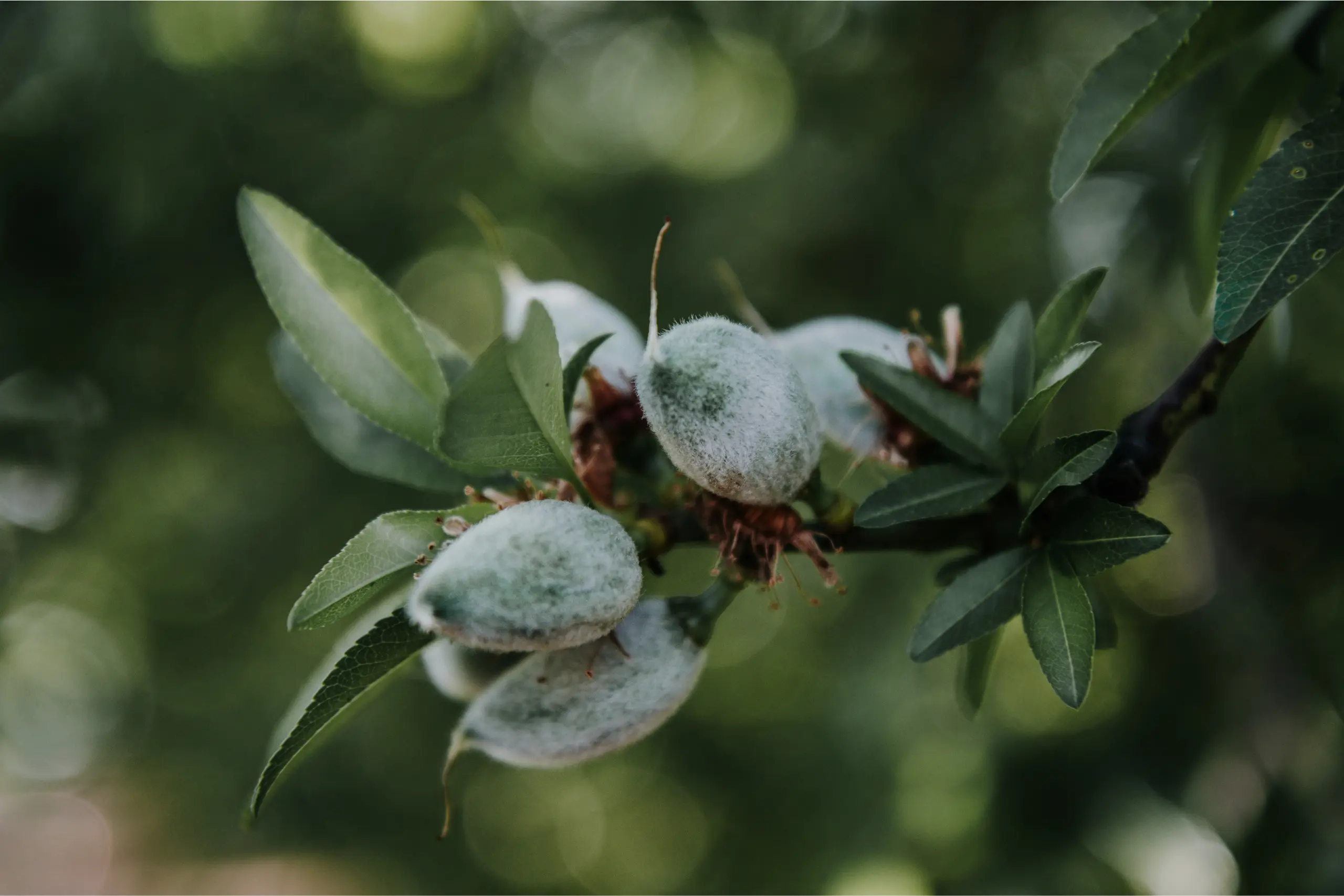
Nuts, such as almonds, pistachios, walnuts, and hazelnuts, require efficient water management, fertilization, and input control to maximize productivity and quality.
Root vegetables, tubers, and bulbs
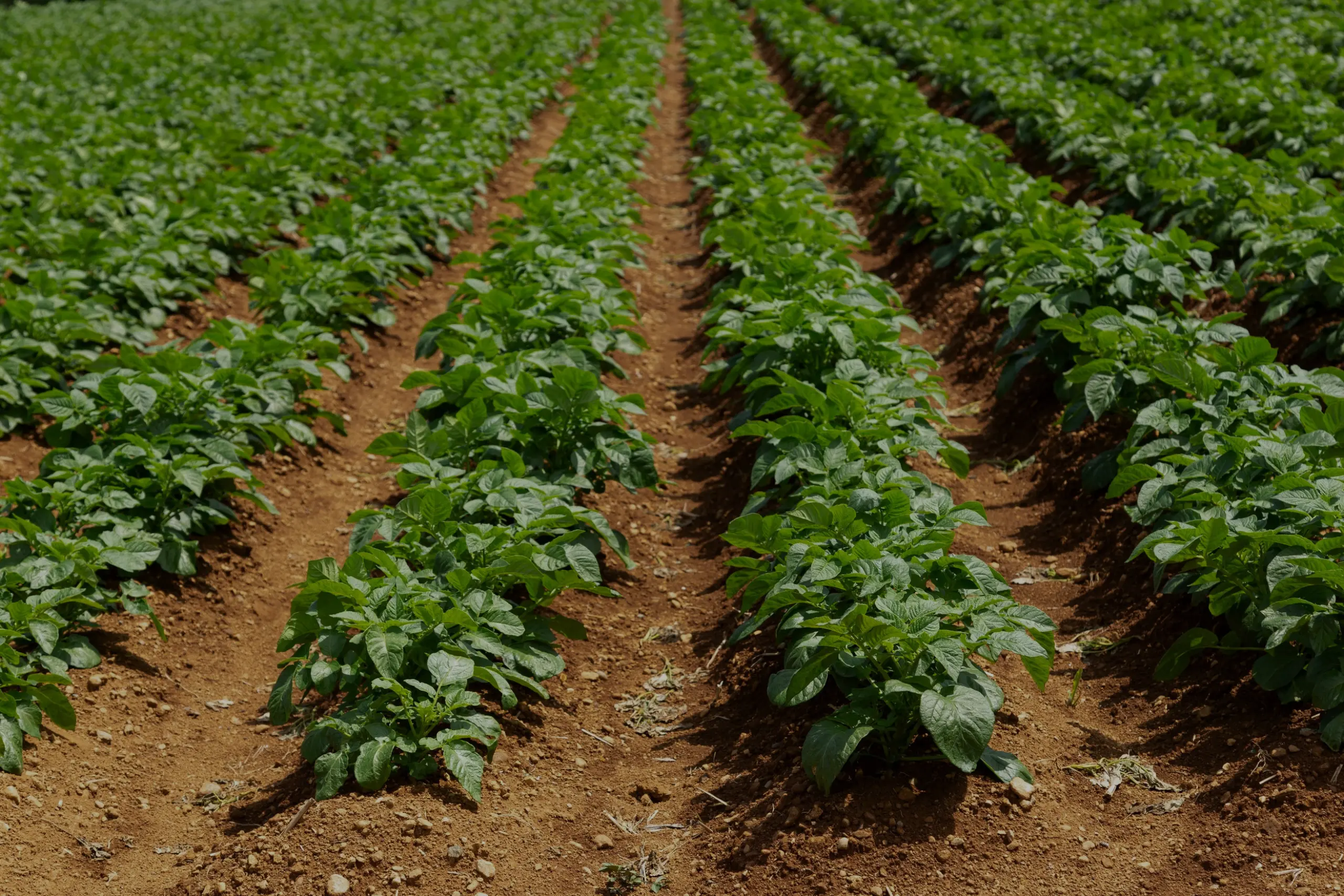
Root vegetables, tubers, and bulbs—such as potatoes, carrots, and onions—require efficient water management, fertilization, and pest control to ensure high yields and quality.
Citrus trees
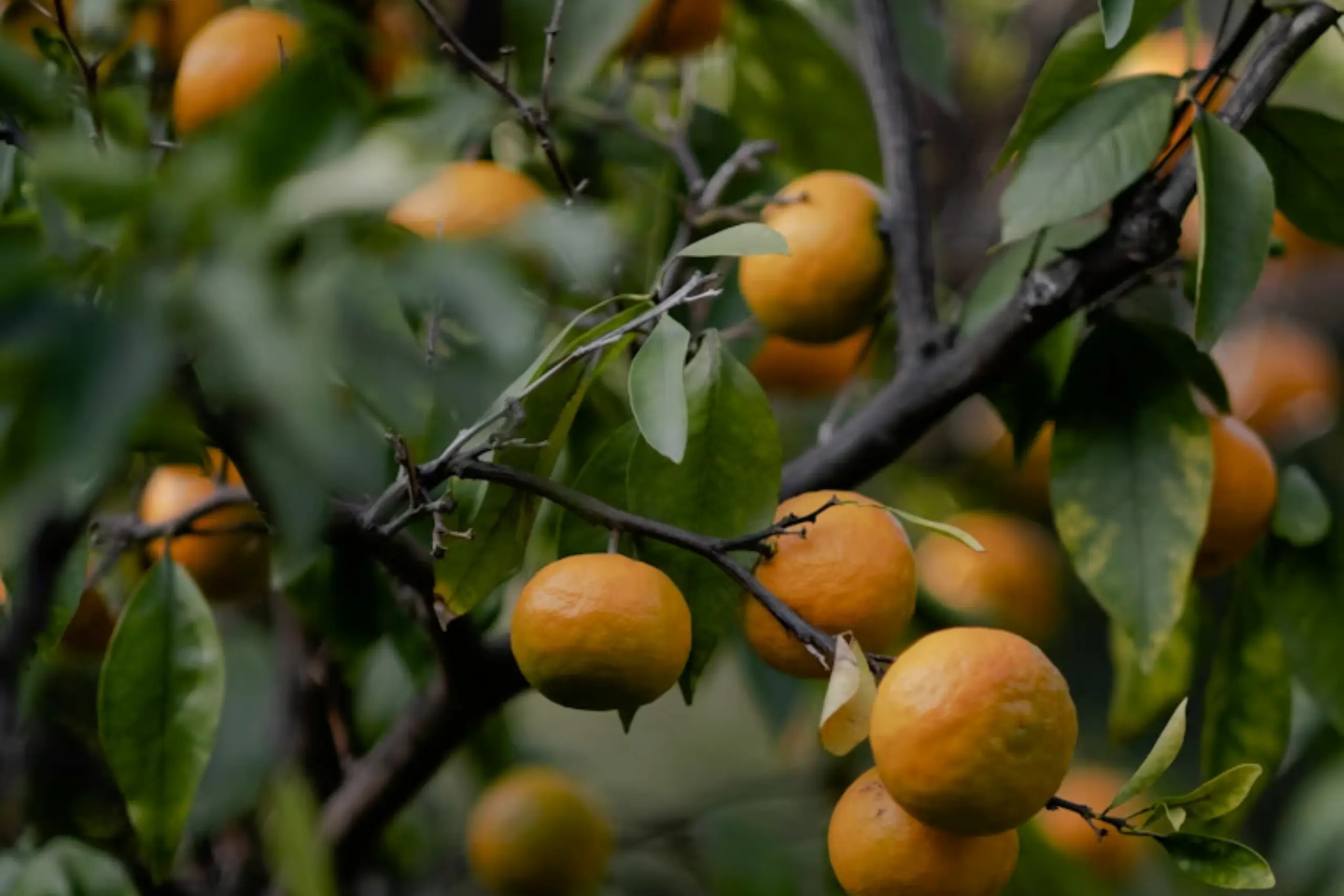
Citrus trees, such as orange, lemon, and mandarin trees, require efficient water management, fertilization, and input control to maximize productivity and quality.
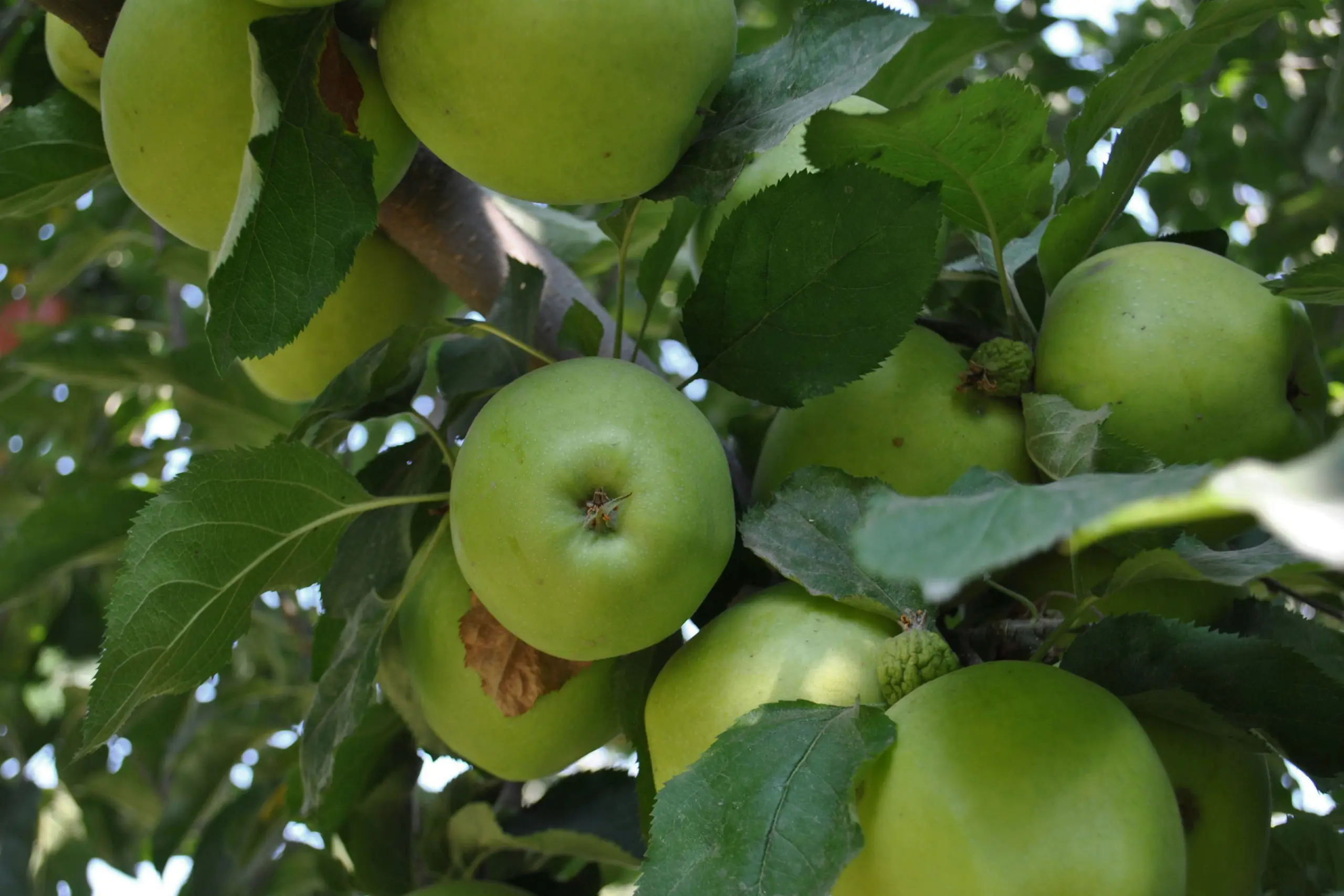
Stone and pome fruits
Stone and pome fruit trees, such as apple, pear, and peach trees, require efficient water management, fertilization, and input control to maximize productivity and fruit quality.
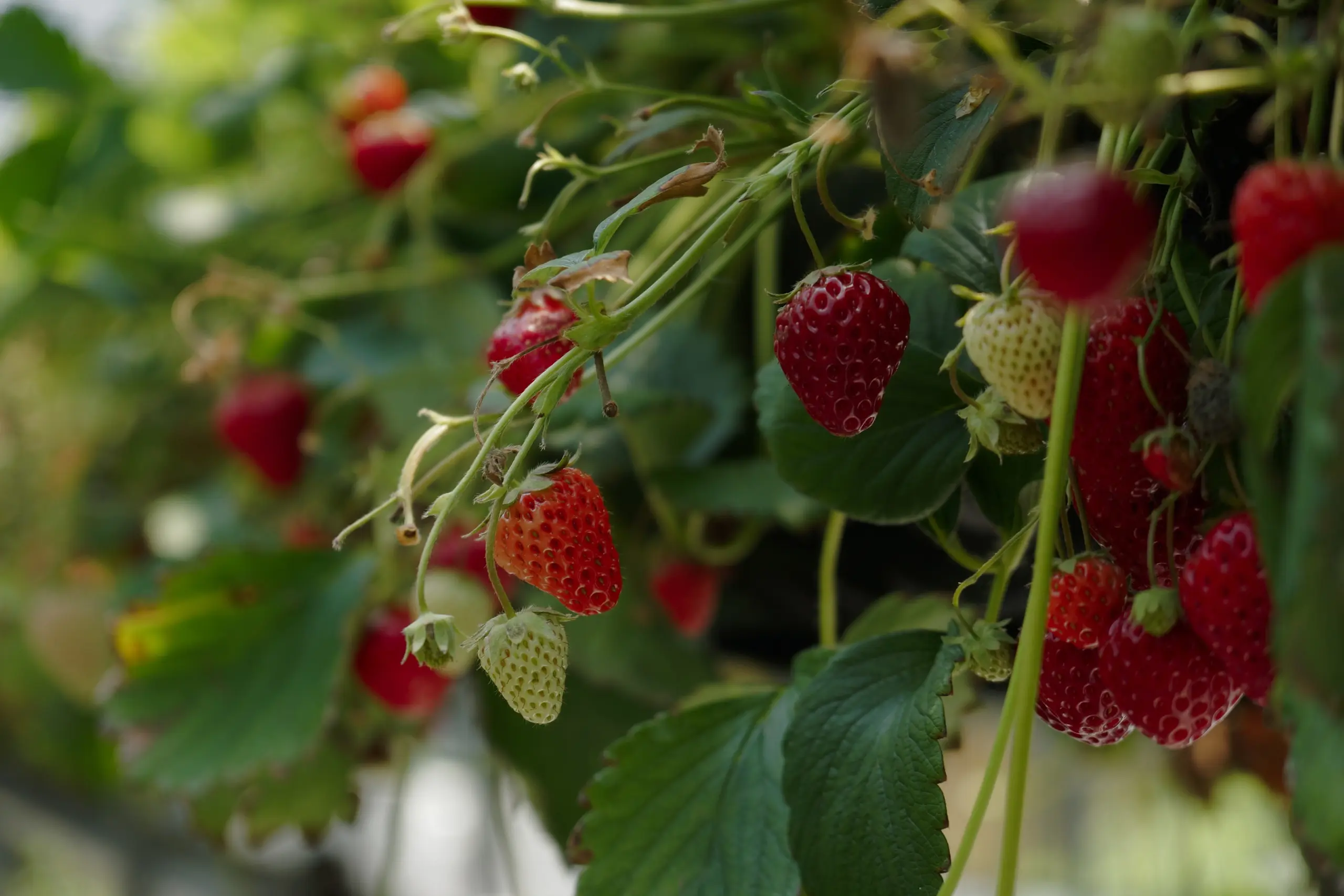
Berries
Monitoring irrigation and the growing medium is key for berries, as water balance and root aeration influence crop development, nutrition, and plant health.
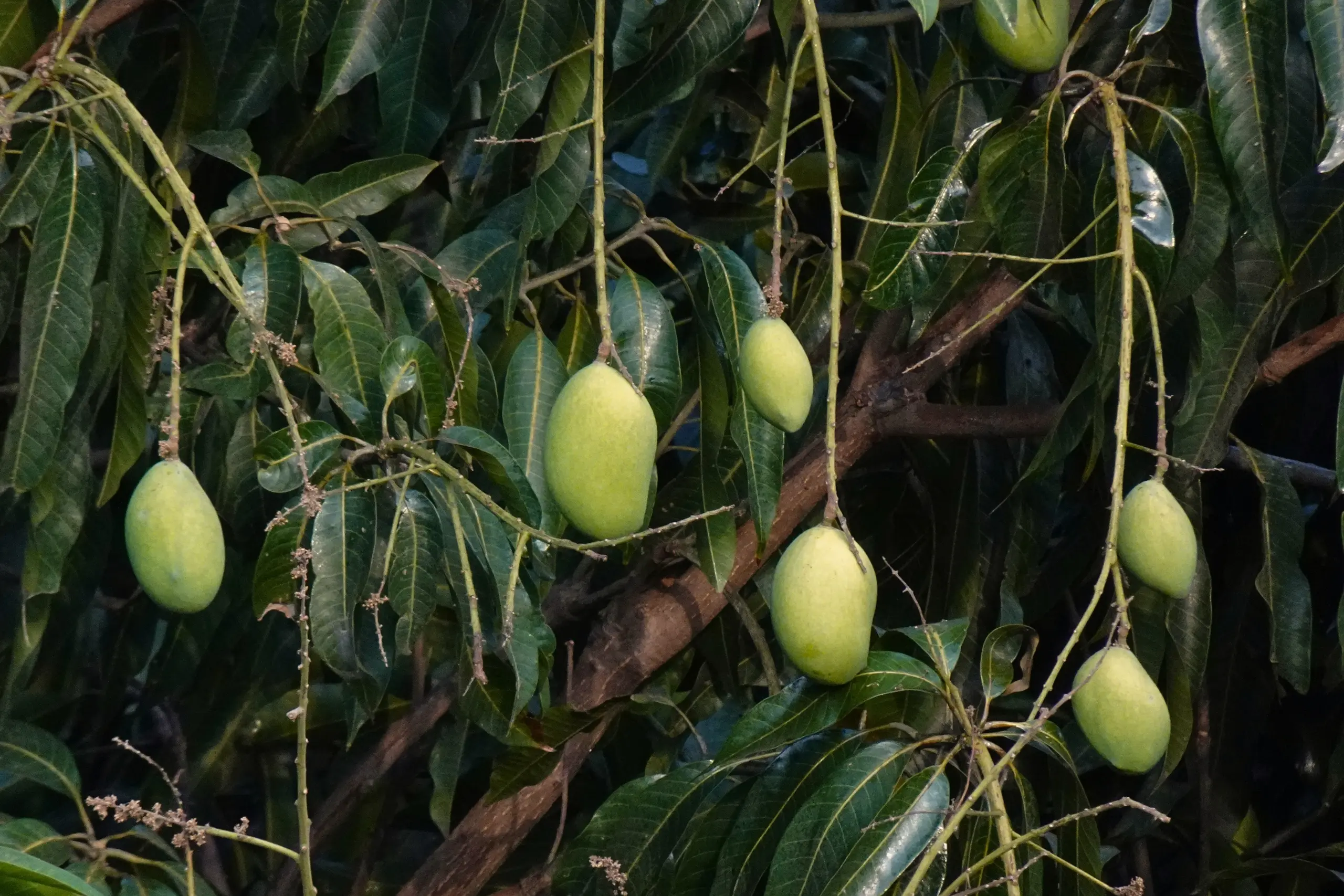
Tropical and subtropical fruit trees
Tropical and subtropical fruit trees, such as avocado, mango, and pomegranate, require efficient water management, fertilization, and input control to maximize productivity and fruit quality.
Almond and olive trees / 900 hectares
“Thanks to VEGGA, our farms operate as a smart system: we can plan irrigation, fertilization, and pest treatments using accurate and reliable data. This gives us peace of mind and allows us to focus on what matters most: maximizing crop productivity and health. ”
Pablo Vega, Director of TerraNostra